

What is an AAU (Active Antenna Unit)?
Introduction
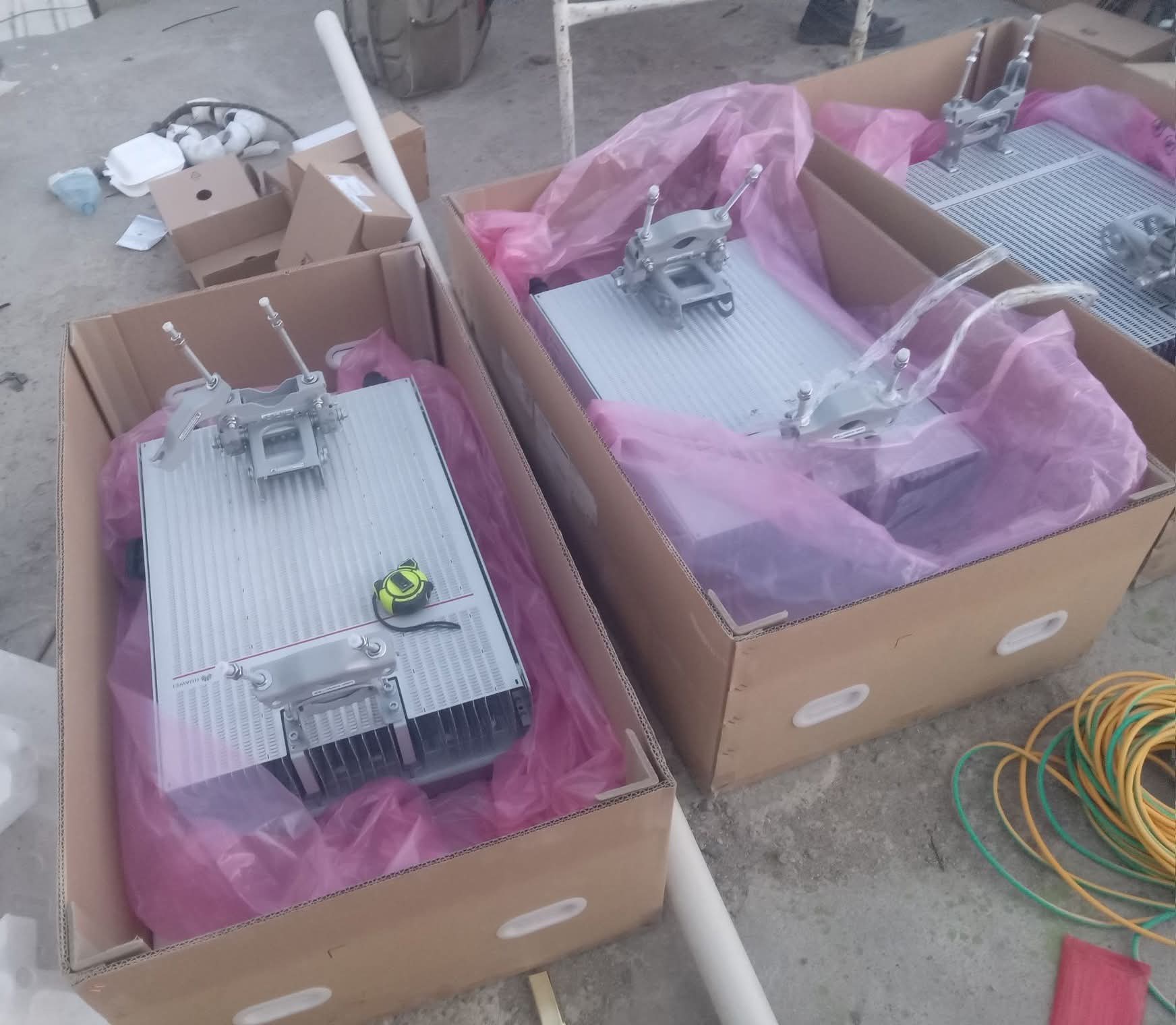
The Active Antenna Unit (AAU) is one of the most important components in modern wireless communication systems, particularly in 4G LTE-Advanced and 5G New Radio (NR) networks. Unlike traditional base station architectures that separate the antenna from the radio equipment, an AAU integrates multiple radio frequency (RF) components into a single compact unit. This integration reduces signal loss, simplifies installation, improves energy efficiency, and enables advanced technologies such as Massive MIMO and beamforming.
As mobile operators continue to increase network capacity and coverage while reducing installation costs and power consumption, the Active Antenna Unit has become the preferred radio solution for high-speed mobile broadband networks. Major telecommunications equipment manufacturers such as Huawei, Ericsson, Nokia, ZTE, and Samsung extensively deploy AAUs in modern cellular base stations.
Definition of an AAU
AAU stands for Active Antenna Unit.
An Active Antenna Unit combines several essential radio components into one integrated outdoor device. These include:
- Antenna
- Remote Radio Unit (RRU)
- Power Amplifier (PA)
- Radio Frequency (RF) Processing Module
Instead of installing these components separately, the AAU houses them within a single weatherproof enclosure mounted directly on the communication tower or rooftop.
This integrated design minimizes feeder cable losses while improving radio performance and simplifying site deployment.
Main Components of an AAU
1. Antenna
The antenna is the part of the AAU responsible for transmitting and receiving electromagnetic waves.
It converts electrical RF signals into radio waves during transmission and converts incoming radio waves back into electrical signals during reception.
Modern AAUs typically employ multiple antenna elements arranged in arrays.
These arrays support advanced technologies including:
- MIMO (Multiple Input Multiple Output)
- Massive MIMO
- Beamforming
- Spatial multiplexing
Unlike conventional antennas, AAU antennas are intelligent and electronically controlled.
2. Remote Radio Unit (RRU)
The Remote Radio Unit performs radio transmission and reception functions.
Its responsibilities include:
- RF signal generation
- RF reception
- Frequency conversion
- Signal modulation
- Signal demodulation
- Digital-to-analog conversion
- Analog-to-digital conversion
In older base station designs, the RRU was installed separately below the antenna.
In an AAU, the RRU is integrated directly into the antenna enclosure, reducing losses between the radio and antenna.
3. Power Amplifier (PA)
The Power Amplifier increases the strength of the RF signal before transmission.
Without sufficient amplification, the radio signal would not travel the required distance to reach mobile devices.
Modern AAUs employ highly efficient amplifier technologies such as:
- Doherty amplifiers
- Gallium Nitride (GaN) amplifiers
- Digital predistortion (DPD)
These technologies improve efficiency while reducing heat generation and energy consumption.
4. RF Processing Module
The RF Processing Module performs advanced signal processing functions.
Typical tasks include:
- Frequency filtering
- Carrier aggregation
- Signal conditioning
- Beamforming calculations
- Massive MIMO processing
- Interference suppression
The RF processor continuously optimizes signal quality to improve network performance.
How an AAU Works
An Active Antenna Unit receives digital data from the Baseband Unit (BBU) through a high-speed optical fiber connection.
The process occurs in several stages:
- The Baseband Unit generates digital communication signals.
- These signals are transmitted over optical fiber to the AAU.
- The RF Processing Module converts digital information into RF signals.
- The Power Amplifier increases the RF signal power.
- The antenna radiates the microwave signal toward mobile users.
During reception, the reverse process occurs.
The antenna captures radio signals from mobile devices.
The RF circuitry amplifies and filters the received signals before converting them back into digital form.
The processed data is then transmitted to the Baseband Unit for decoding.
Advantages of an Active Antenna Unit
Reduced Cable Losses
One of the biggest advantages of an AAU is the elimination of long RF feeder cables.
Traditional base stations used lengthy coaxial cables between the antenna and the radio equipment.
These cables introduced insertion losses that reduced transmit power and receiver sensitivity.
Since the AAU integrates the radio directly into the antenna, cable losses are minimized.
This improves overall radio efficiency.
Higher Energy Efficiency
Integrated radio components consume less power than separate equipment.
Modern power amplifiers also achieve efficiencies exceeding 50%, reducing operating costs for network operators.
Lower power consumption also means reduced cooling requirements.
Easier Installation
Because several components are combined into one enclosure, installation becomes much simpler.
Field engineers need to install:
- One unit
- One mounting bracket
- One fiber connection
- One power cable
This significantly reduces installation time.
Improved Reliability
Fewer external connections mean fewer possible failure points.
There are:
- Fewer connectors
- Fewer RF cables
- Less water ingress
- Reduced corrosion
- Lower maintenance requirements
The integrated design increases long-term reliability.
Massive MIMO Support
One of the defining features of modern AAUs is support for Massive MIMO (Multiple Input Multiple Output).
Traditional antennas may have:
- 2 transmit ports
- 2 receive ports
Modern AAUs commonly support:
- 32T32R
- 64T64R
- 128T128R
where:
- T = Transmit channels
- R = Receive channels
Having dozens of transmitters and receivers allows the network to communicate with many users simultaneously.
Massive MIMO significantly increases:
- Capacity
- Coverage
- Spectral efficiency
- User throughput
This technology is fundamental to 5G networks.
Beamforming Technology
AAUs support intelligent beamforming.
Instead of broadcasting energy equally in all directions, the AAU electronically steers radio beams toward active users.
Beamforming provides several benefits:
- Increased signal strength
- Reduced interference
- Improved indoor coverage
- Higher data rates
- Better user experience
Electronic beam steering occurs almost instantly without physically moving the antenna.
The system continuously tracks user movement and adjusts beam direction accordingly.
Frequency Bands Supported
Modern AAUs can operate over multiple frequency bands, including:
- 700 MHz
- 800 MHz
- 900 MHz
- 1800 MHz
- 2100 MHz
- 2300 MHz
- 2600 MHz
- 3.5 GHz
- 4.9 GHz
Some advanced AAUs support multiple bands simultaneously through carrier aggregation.
Applications of AAUs
Active Antenna Units are widely deployed in:
5G Networks
AAUs provide:
- Massive MIMO
- Beamforming
- High throughput
- Low latency
These capabilities are essential for 5G services.
4G LTE Networks
Many LTE-Advanced sites use AAUs to improve:
- Capacity
- Coverage
- Network efficiency
Smart Cities
AAUs support:
- Intelligent transportation
- Surveillance
- Connected infrastructure
- Public safety communication
Industrial Networks
Private LTE and 5G systems use AAUs in:
- Manufacturing
- Mining
- Oil and gas
- Ports
- Airports
Reliable wireless communication enables automation and real-time monitoring.
Comparison Between Traditional Antennas and AAUs
| Traditional Antenna | Active Antenna Unit |
|---|---|
| Passive antenna only | Integrated antenna and radio |
| Separate RRU | Built-in RRU |
| Long RF feeder cables | Minimal RF cable loss |
| Limited MIMO capability | Supports Massive MIMO |
| Fixed coverage | Intelligent beamforming |
| Higher installation complexity | Simplified installation |
| Lower spectral efficiency | Higher network capacity |
| More maintenance | Reduced maintenance |
Challenges of AAUs
Despite their many advantages, AAUs also present some challenges.
These include:
- Higher initial purchase cost
- Increased equipment weight
- More complex maintenance
- Greater power requirements for large Massive MIMO units
- Need for specialized installation equipment
However, these disadvantages are generally outweighed by improved network performance and reduced long-term operating costs.
Future of Active Antenna Units
As wireless communication continues to evolve toward 5G-Advanced and eventually 6G, AAUs will become even more sophisticated.
Future developments are expected to include:
- AI-assisted beamforming
- Intelligent self-optimization
- Higher-order Massive MIMO arrays
- Improved energy-saving algorithms
- Cloud-controlled radio management
- Integrated sensing and communication capabilities
These advancements will further increase network capacity, reduce latency, and improve user experience while lowering operational costs.
Conclusion
The Active Antenna Unit (AAU) represents a major advancement in cellular radio access technology by integrating the antenna, Remote Radio Unit (RRU), Power Amplifier (PA), and RF Processing Module into a single compact device. This integration reduces cable losses, improves energy efficiency, simplifies installation, and enhances overall network reliability. AAUs also enable advanced technologies such as Massive MIMO, beamforming, and carrier aggregation, which are essential for delivering the high capacity, coverage, and speed required by modern 4G LTE-Advanced and 5G networks. As mobile communication continues to evolve, the AAU will remain a fundamental building block of next-generation wireless infrastructure, supporting faster data rates, greater spectral efficiency, and more intelligent radio resource management.